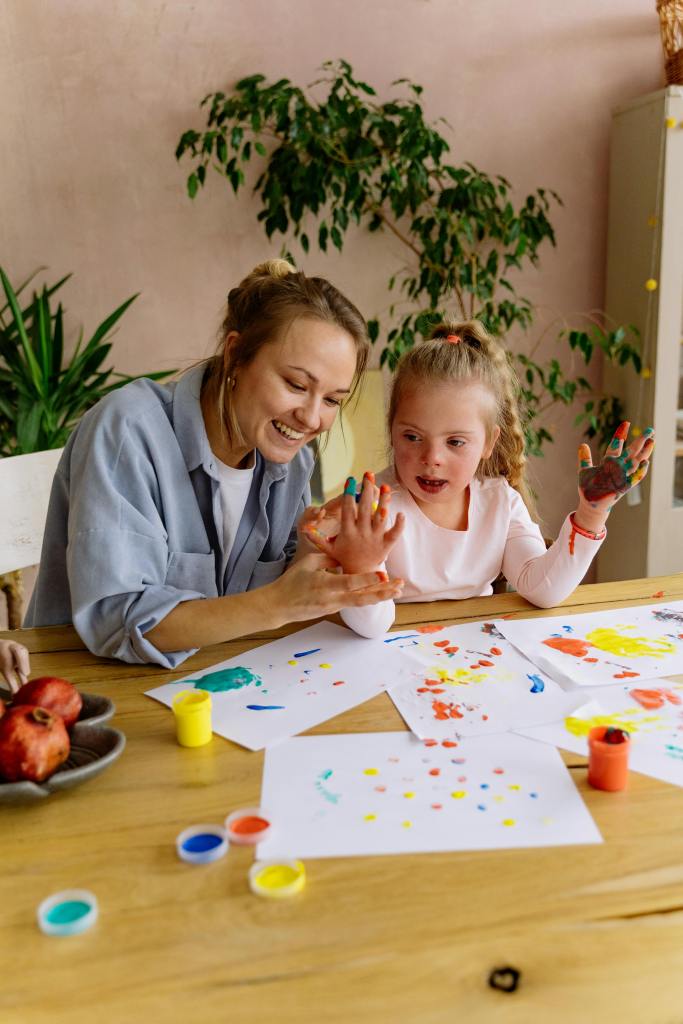
For many children with additional needs, routines are not just helpful. They can feel like safety.A predictable routine tells a child what is happening now, what comes next, and what is expected of them. This can reduce anxiety, support independence, and make daily life feel less overwhelming.But routines do not need to be strict or perfect.A gentle routine should support your child, not pressure them.
Morning routines
Mornings can be difficult because there are many steps close together: waking up, washing, dressing, eating, packing bags, leaving the house, and arriving at school or childcare.Try making the morning routine visual.You could use simple pictures for:Wake up,Toilet/wash, Get dressed, Breakfast, Shoes and coat, Bag, Leave home, Keep the language short:
“First breakfast, then shoes.”“Coat on, then car.”“Bag first, then we go.”Some children also benefit from extra time in the morning, especially if they struggle with sensory discomfort from clothes, noise, rushing, or changes.School routines,before school, remind your child what will happen.You might say:“Today is a school day. You will go to class, have lunch, play outside, and then I will collect you.”If your child finds separation difficult, a small comfort object, picture card, or goodbye phrase may help.Try using the same goodbye each day:“I love you. You are safe. I will come back after school.”Repeating the same phrase can feel reassuring.
Transition routines
Transitions can be one of the hardest parts of the day.Moving from playtime to dinner, home to school, screen time to bedtime, or a favourite activity to a less preferred task can cause distress.Try giving warnings:“Five more minutes.”“Two more turns.”“After this episode, it is bath time.”Timers, songs, picture cards, or a visual “now and next” board can help children understand the change.
Bedtime routines
A calm bedtime routine can help your child’s body and mind prepare for sleep.A simple bedtime routine might be:Bath or wash, Pyjamas, Brush teeth, Story, Cuddle, Lights, low Sleep.Try keeping bedtime language soft and predictable.Avoid adding too many choices if your child becomes overwhelmed. Instead of asking, “What do you want to do now?” you might say, “It is story time now. You can choose this book or that book.”When routines go wrongSome days, the routine will not work.Your child may be tired, unwell, overstimulated, hungry, worried, or simply unable to cope that day.That does not mean the routine has failed.It means your child needed support in that moment.You can return to the routine later.Final encouragementA routine does not need to be perfect to be helpful.Start small.
Choose one part of the day that feels most stressful and gently add structure there first.One simple visual chart, one repeated phrase, or one calmer transition can make a real difference.
Questions to ask your child.
What part of the day feels easiest for you? What part of the day feels tricky? Would pictures help you know what is coming next? What helps you feel calm before bedtime?
It can be hard when your child’s progress looks different from other children’s.You may see another child speaking more clearly, playing differently, learning faster or coping more easily. Even when you love your child deeply, comparison can still hurt.Many parents feel this quietly.You may feel proud of your child and worried at the same time. You may celebrate progress while also wishing some things were easier for them. These mixed feelings are normal.Your child’s journey does not have to look like anyone else’s to be meaningful.Some children need more time. Some need different support. Some show progress in ways that are easy to miss unless you know them well.Maybe your child tried something new today. Maybe they stayed calm a little longer. Maybe they communicated in their own way. Maybe they coped with a situation that used to feel too hard.That is progress.It may not always look like a chart, milestone or school report. Sometimes progress looks like courage. Sometimes it looks like patience. Sometimes it looks like trying again after a hard moment.As a parent, you are allowed to want support. You are allowed to ask questions. You are allowed to feel tired. You are allowed to celebrate small steps that others may not understand.Your child is not a problem to be fixed. Your child is a person to be loved, understood and supported.Their pace may be different, but their progress still matters.And so does yours.
Parenting is already full of questions, tired days, and moments where you wonder if you are doing enough.When your child has additional needs, those feelings can become even heavier.You may be managing appointments, school meetings, meltdowns, sensory needs, speech delays, learning differences, routines, paperwork, behaviour concerns, sleep difficulties, or worries about the future. Some days may feel calm. Other days may feel like you are simply trying to get through the next hour.If you are reading this and feeling tired, unsure, emotional, or overwhelmed, this is your reminder:You are not failing.You are parenting in a situation that often asks more from you than people can see.
You are doing more than you realise.
Many parents of children with additional needs carry invisible responsibilities every day.You may be the person who notices small changes in your child’s mood. You may be the one preparing them for school, explaining their needs to others, watching for triggers, calming them after a difficult day, or trying to understand what they cannot yet say with words.You may be researching support late at night. You may be filling in forms, chasing appointments, speaking to teachers, or wondering whether your child is getting the right help.That work counts.Even when it is unpaid, unseen, and exhausting, it matters.In England, children with special educational needs and disabilities may receive support through school SEN support or, for more complex needs, an Education, Health and Care Plan. GOV.UK advises parents to speak to the school or nursery SENCO if they think their child may have special educational needs.
Struggling does not mean you are a bad parent
There may be days when you lose patience. Days when you cry. Days when you compare your family to others and wonder why things feel harder.That does not mean you are failing.It means you are human.Children with additional needs may need extra time, extra support, extra patience, and extra understanding. Parents need support too.You are allowed to feel grateful for your child and still feel exhausted. You are allowed to love your child deeply and still admit that some days are difficult.Both can be true.
Small progress is still progress
Progress may not always look big or obvious.For one child, progress may be sitting through a whole story.For another, it may be trying a new food.For another, it may be using one new word, tolerating a noisy place for five minutes, sleeping slightly better, or getting through a school morning with fewer tears.These moments matter.Try keeping a small “wins list” on your phone or in a notebook. Write down things like:“He put his shoes on with less help today.”“She told me she needed quiet time.”“He stayed calm for two minutes longer.”“She tried one bite.”“We got through bedtime without shouting.”On hard days, this list can remind you that your child is growing, even when progress feels slow.
Your child does not need a perfect parent
Your child does not need you to know everything.They need someone who keeps trying.They need someone who notices them, listens to them, learns about them, and stands beside them.Sometimes support looks like a visual timetable. Sometimes it looks like a quiet cuddle. Sometimes it looks like cancelling a plan because your child is overwhelmed. Sometimes it looks like asking for help because you cannot carry everything alone.That is not weakness. That is care.
Practical things that may help this week
You do not have to change everything at once. Try one small thing.
1. Create one calm space; This does not have to be a full sensory room. It could be a corner with cushions, a blanket, soft toys, books, headphones, or a quiet activity.Let your child know: “This is your calm space. You can come here when things feel too much.”
2. Use simple language during stressful moments; When a child is overwhelmed, long explanations can be too much.Try short, calm phrases:“Safe.”“Breathe.”“I am here.”“First shoes, then car.”“Quiet time now.”
3. Prepare for transitions; Many children with additional needs find change difficult. Try giving warnings before a change happens:“In five minutes, we are leaving.”“After this programme, it is bath time.”“First dinner, then story.”Pictures, timers, or a simple routine chart can also help.
4. Ask school what support is already in place.You can ask your child’s teacher or SENCO: What support is currently being used? What helps my child most during the day? What does my child find hardest? Can we agree one small target to work on together? You do not need to have all the answers before asking for a conversation.
5. Find one support organisation You do not have to do this alone. Contact is a UK-wide charity that provides advice, information, and support for families with disabled children, and the NHS service page lists its helpline as 0808 808 3555. nhs.uk IPSEA also provides free legally based SEND information and advice for parents, carers, and young people in England, including guidance around SEN support, EHC needs assessments, EHC plans, exclusions, and appeals. IPSEA
Helpful links for parents
GOV.UK SEND overview: Information about SEND support and EHC plans in England. GOV.UK GOV.UK SEND guide for parents and carers: A parent guide to the SEND support system in England. GOV.UK IPSEA: Free SEND legal guides, template letters, and advice services for families in England. IPSEA Contact: UK-wide support for families with disabled children. nhs.uk Family Lives Parentchannel.tv: A free video service with parenting videos covering wellbeing, behaviour, and learning.
A gentle reminder for today
You may not always see the progress clearly.You may feel behind.You may feel tired.You may feel like other families are coping better.But your child does not need you to be perfect.Your child needs love, safety, patience, support, and someone who keeps showing up.And if you are showing up again today, even while tired, even while unsure, even while learning as you go, then you are already doing something important.You are not failing. You are carrying more than people see, and you are doing better than you think.